

News & Gameplay Notes: Elden Ring (The Board Game)
Some updates from MonarcWriter, and some thoughts on game design after playing the Elden Ring board game.

Summer is in full swing, keeping me very busy, but I am back this week with some updates about upcoming events and projects, as well as some notes on my recent experience with the Elden Ring board game.
MonarcWriter News
This Sunday, June 13th, I will be participating in an Authors Fair at my favorite local indie bookstore, A Seat At The Table Books in Elk Grove, CA. I will be in attendance from 3:30pm-5:30pm. There will be physical copies of all of my original game books and card decks for sale, as well some freebies to give out to anyone who swings by my table. A Seat At The Table is a fantastic queer-owned bookstore and cafe that has done so much to make itself into a third-space for the community. If you are in the greater Sacramento area, come out and support myself, the store, and many other local authors!
Print versions of A Butterfly Story and A Dream of Thorns & Roses are now available for order at DriveThruRPG! Both physical books contain a few additional pages of extra content, including optional rules and templates to make tracking your stories easier! The PDF version of the bonus content for A Dream of Thorns & Roses is also available for FREE!
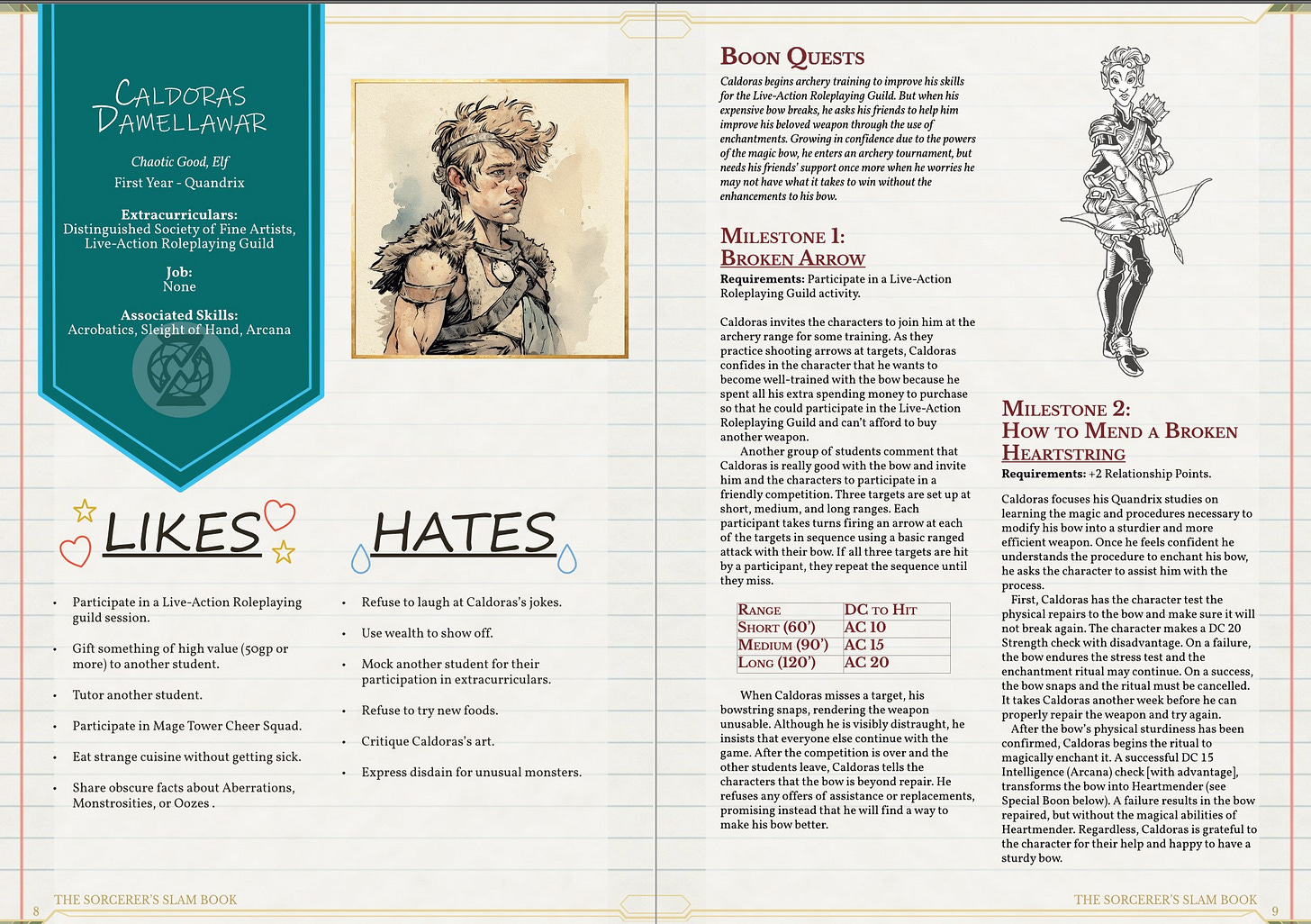
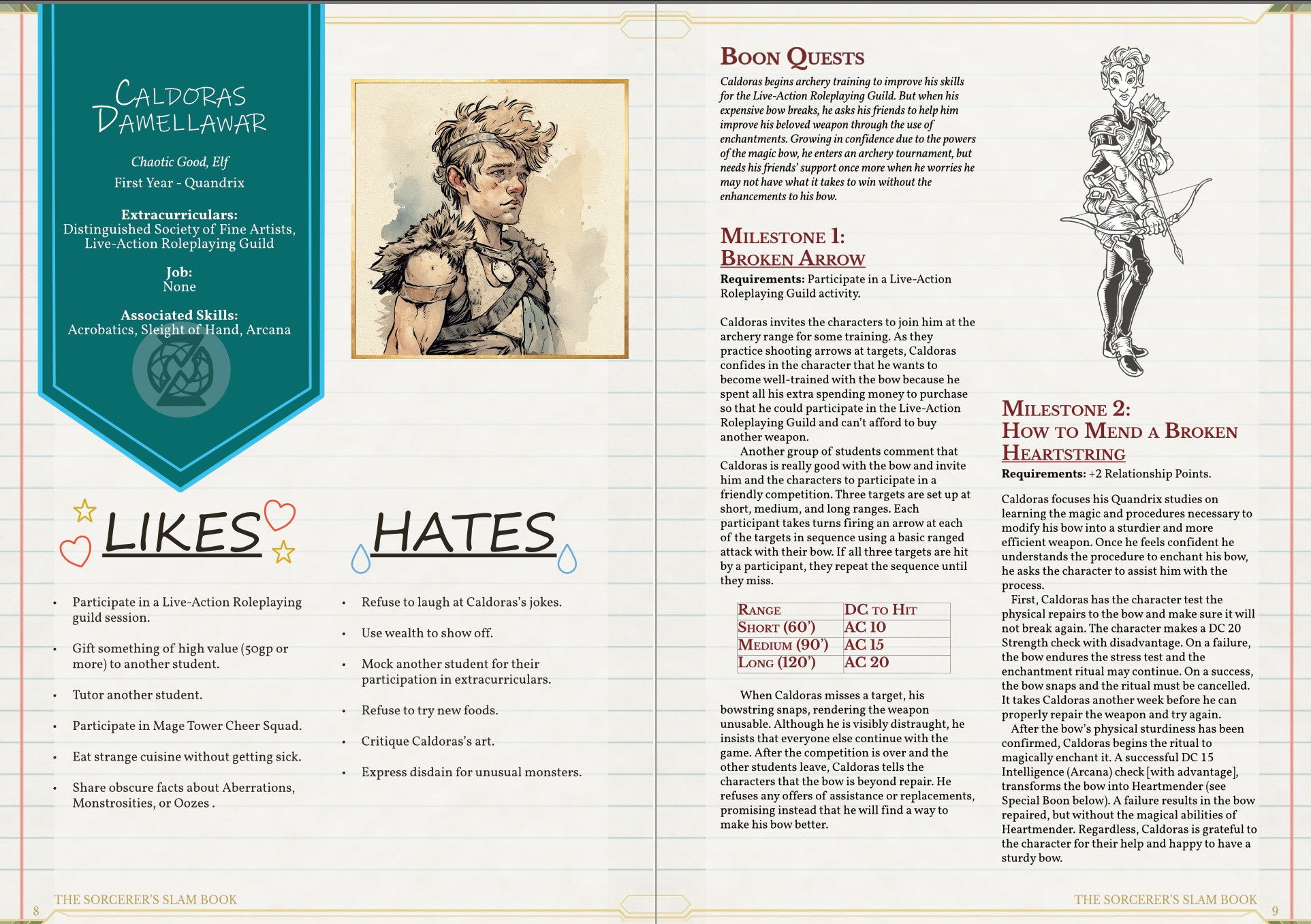
Progress continues on the upcoming collaborative DMsGuild project: Strixhaven: Sorcerer’s Slam Book. The design team of nine writers have put together some truly unique and fun encounters for the 18 NPC relationships of Strixhaven University, expanding on the Beloved and Rival mechanics of the campaign setting. I am hard at work on editing and layout for the final product, with a hopeful release date sometime in the next few weeks. Here’s a WIP sneak peek:
Gameplay Notes - Elden Ring: The Board Game
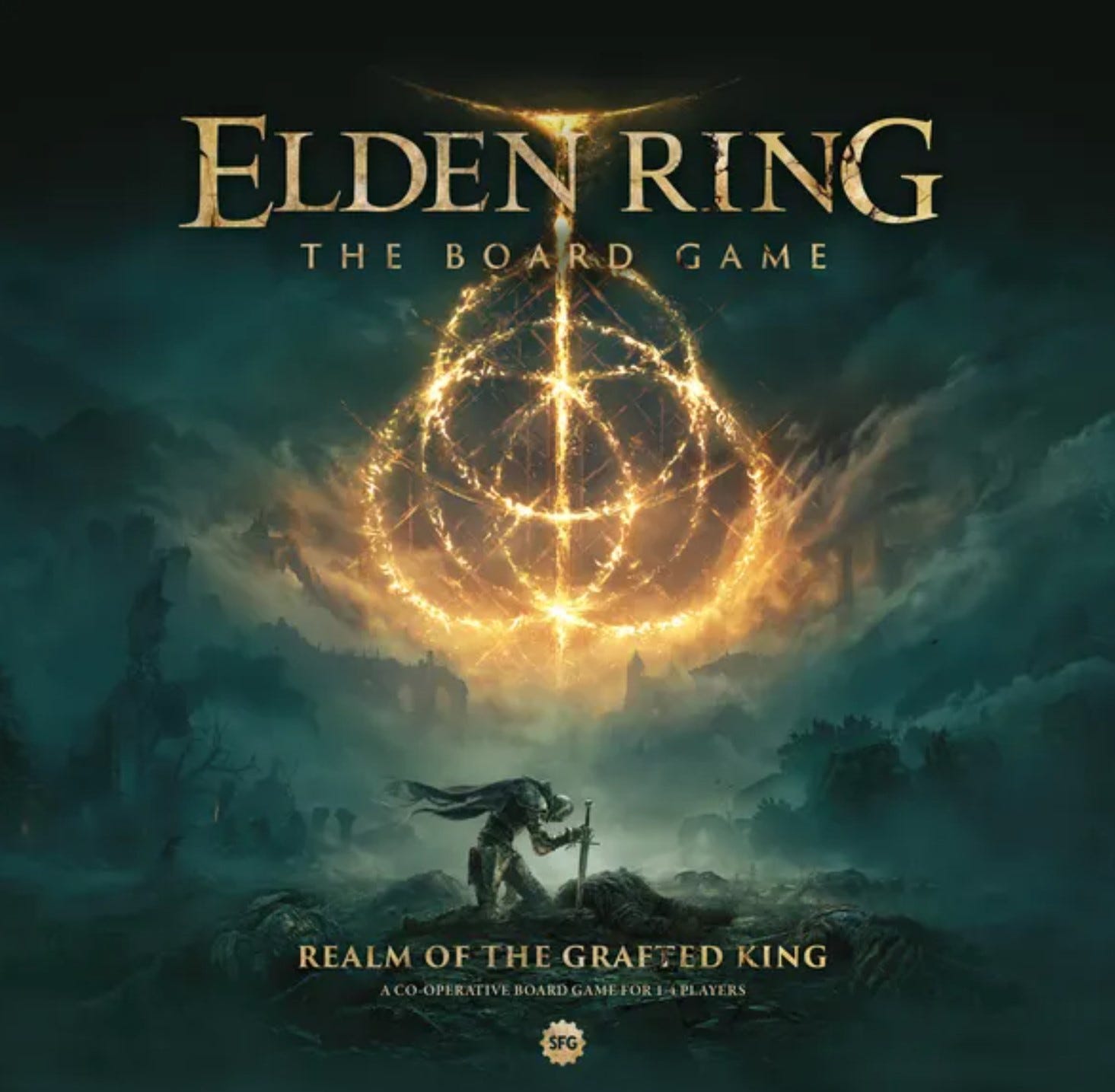
Last weekend, my friends and our families travelled for an annual tradition of a weeklong gaming get-together. We got to play many tabletop games and card games, but the main event for the week was Elder Ring: The Board Game. While we played a lot, we didn’t get through nearly enough of the game to put together a full review. However, I did come away from the experience with a lot of notes and thoughts that I wanted to share about game design and the balance between design objectives vs. the actual player experience.
Scenario Structure: The game is campaign based but broken up into scenarios that can be played episodically, allowing for natural breaks to the game. The scenario types are divided into three categories: Narrative, Exploration, and Combat (with Dungeon, Gauntlet, and Boss variants). We played through the first six scenarios of the base game, which included 2 of each type of scenario.
CON: Do not waste the players’ time. The two narrative scenarios we played had a lot of text to read, with ultimately no effect on the gameplay of the rest of the game. Choices are presented every now and then, but they either led to nothing or actively punished the group for choosing to explore. Very often, text entries would be very long only to literally end with the words, “But none of that matters.” These scenarios felt undeveloped and unnecessary to the game.
CON: Consider how much setup and organization is required to play. The box comes with a lot of clutter to organize and manage. There are a lot of components to the game, almost all of them in card format. Some cards have a letter/number identifier to find them, but many (like the enemy behaviors and event and encounter cards) do not, even though the game often requires you to find specific cards to continue. Cards also vary in size, with resources in particular in a much smaller size that made them easy to get lost or forgotten while playing. We had a dedicated table for the game and didn’t clean up until the end of the week, as set-up and storage would just take too long.
CON: How easy is it to find information and rules? The rules, scenario, and encounter books often contained sections that required you to reference the other books for specific rules or explanations, making for a lot of page turning and book switching to figure out what to do or how a mechanic works.
PRO: Make the players feel smart/heroic/powerful. Combat was the highlight of the game. The card-based actions combined with the enemy behaviors make every battle a tactical puzzle. The initiative mechanics cause the parameters of that puzzle to randomize every round, while using the same components. It translates learning the rhythm of a video game boss battle very well.
PRO: Players should always have something to do. Every combat action feels like it contributes to advancing the game. No turn or action ever feels wasted. Even a terrible hand of cards leads to the discard action, which allows you to restore resources or deal light damage.
PRO: Simple mechanics can convey grand experiences. Exploration is simple but fun. Hex tiles are randomized and laid out as you explore the world, with each tile including encounters, resources, fast travel, or restoration points. Like in the video game, Sites of Grace not only heal you, but also reset the map around them, making it possible for tiles to have multiple uses and threats. The tile stack also carries over and adds in new tiles across scenarios, gradually building the world as you get further into the campaign.
PRO: Make learning the game feel rewarding. Character Quests give direction when it comes to decisions. Each character class has a series of quests that build off each other while slowly pushing the player to interact with different aspects of the game. It was a neat way to introduce and teach aspects of the game while rewarding players for doing so.
Overall, despite the frustrating design choices noted above, our group came away from the game wanting to play more. What the game does well, it does very well and makes for a great experience. The biggest take-away for my own game design process is to be aware of the commitments your game asks of its players, and how those commitments can enhance or detract from the play experience.